
Free written scope consultation - allowances, timeline, and change-order rules on paper before a single trade is scheduled
James Hardie Home Additions & ADU: The Dallas Owner’s Guide
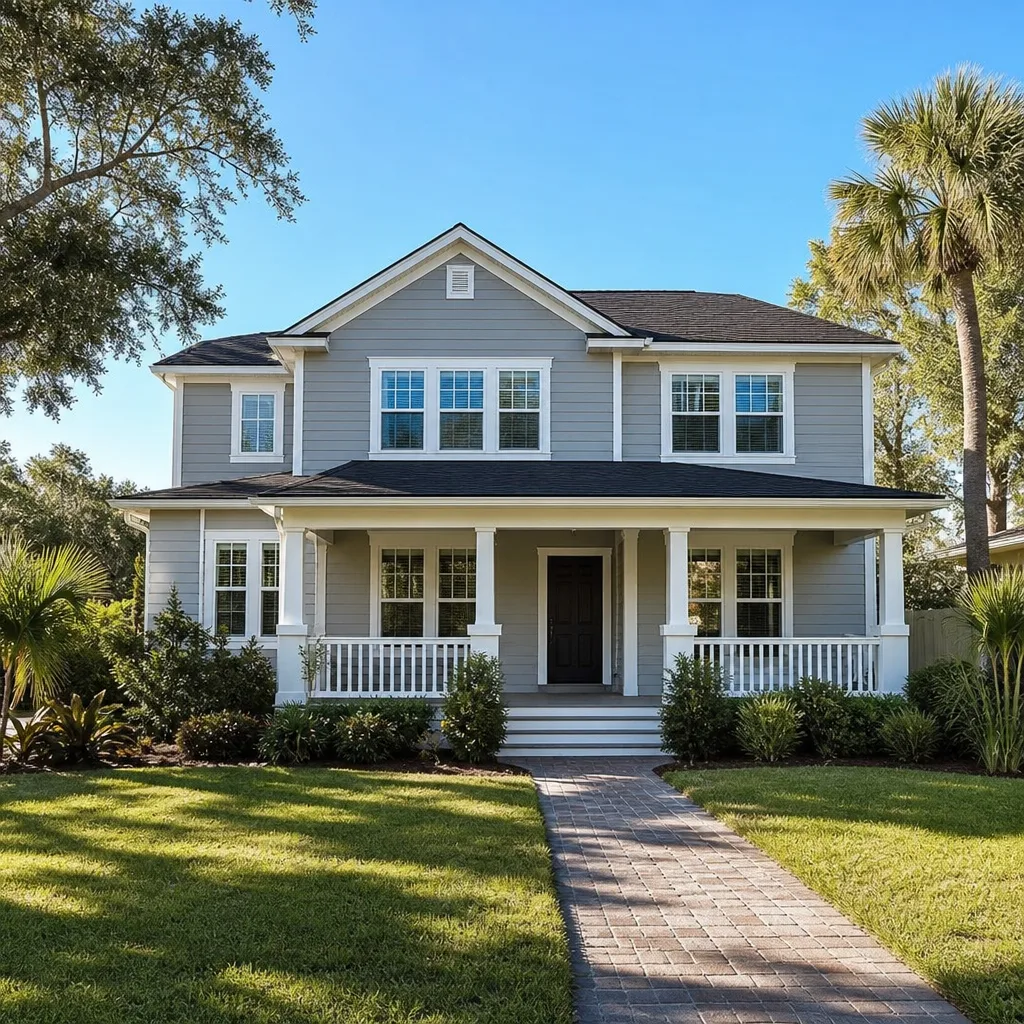
If your James Hardie siding or trim is failing on an existing addition, bump-out, or ADU in Dallas, we replace and rebuild it, with most full home additions running $45,000 – $130,000 and ADU construction typically between $90,000 and $220,000. The most common reason homeowners call us is Hardie board that’s swollen, cracked, or pulling away at the seams after years of Texas heat and rain. It’s not an emergency in most cases, but water getting behind the siding is a slow rot problem, and Dallas humidity gives it a head start. We stock James Hardie-compatible trim, lap siding, and panel products, and our crew handles the tear-out, moisture barrier, and re-installation as one job. As Trevor Nash puts it, “Give you a number before I pick up a tool – that’s the only way I know how to start.”
Which James Hardie Models This Applies To
Most home additions and ADUs in Dallas built or re-sided in the last 15 years use one of four James Hardie product lines: HardiePlank lap siding, HardiePanel vertical siding, HardieTrim boards, or HardieSoffit panels. The compatibility issue homeowners run into is matching the thickness and exposure of the original product. HardiePlank comes in 5/16-inch and 7/16-inch thicknesses, and if the original installer used 7/16-inch lap with a 7-inch exposure, the replacement has to match that exposure or the shadow lines won’t line up. That’s a mistake we see on DIY re-sides and even some contractor patches. James Hardie fiber cement products are not universal-fit; you cannot swap a HardiePanel for a HardiePlank and expect the same look or water-shedding profile. We also carry primed and ColorPlus pre-finished options, but ColorPlus is a factory finish with specific color codes, so if your addition was clad in ColorPlus Iron Gray, you need that exact code, not a paint match from the local hardware store.
Styles & brands we work with







Signs Your James Hardie Siding or Trim Is Failing
- Swelling or edge cracking at the bottom lap. Fiber cement absorbs water when the factory edge seal is broken or the board sits too close to grade. In Dallas, where spring downpours hit ground level hard, we see boards wick moisture and delaminate within a few seasons if the 6-inch clearance was never maintained.
- Gaps opening at trim joints around windows and doors. James Hardie trim expands and contracts with temperature swings. A 40-degree drop in a North Texas December overnight can pop caulk joints and open seams. Once water gets behind the trim, the sheathing underneath starts holding moisture.
- Chalky or faded ColorPlus finish with exposed raw fiber. The ColorPlus factory finish is tough, but 10-plus years of Dallas sun has a way of bleaching it. If you can see bare fiber cement through the paint, the board is no longer protecting itself from water intrusion.
- Brittle, crumbly sections near sprinkler heads or downspouts. Constant irrigation spray accelerates fiber cement breakdown. This is a Dallas-specific problem we see in neighborhoods like Preston Hollow and Lake Highlands where automatic sprinklers hit the same wall twice a day all summer.
- Visible rust or staining below the siding line. Fiber cement itself doesn’t rust, but the nails holding it do if they weren’t galvanized or the install crew used roofing nails instead of siding nails. When the fasteners fail, boards start pulling away from the wall.
See the difference
 Before
 After
After Before
 After
After Before
 After
AfterReplacement Cost & What’s Included
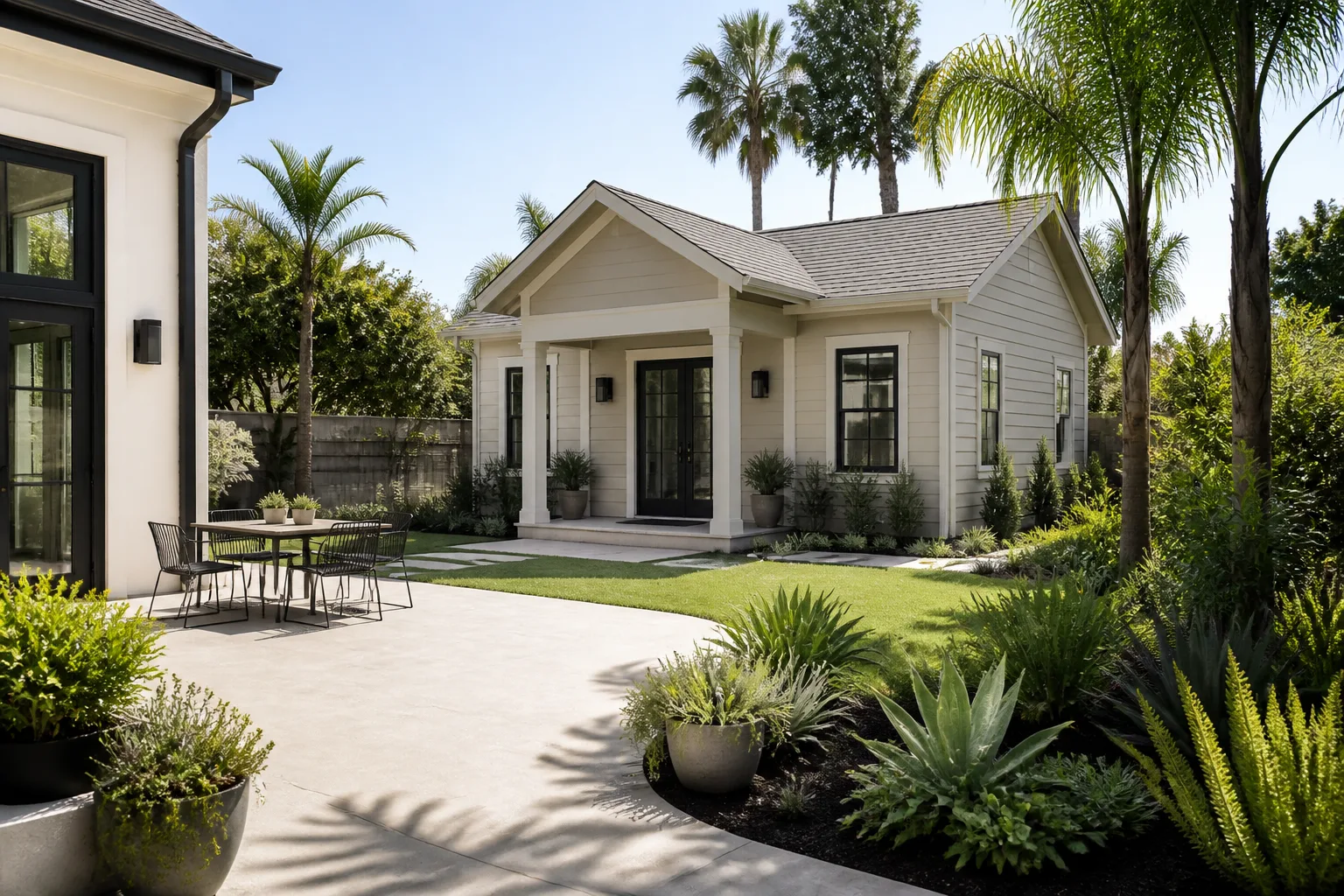
For a James Hardie exterior repair or partial re-side on a home addition in Dallas, you’re looking at $1,200 – $4,500 depending on how many boards, trim pieces, or panels are involved and whether we’re just re-cladding a section or addressing framing damage behind it. Full addition or ADU exterior rebuilds that include all four walls, trim, soffit, and sometimes the moisture barrier run higher, usually meeting or exceeding the $45,000 threshold when combined with the structural work.
What drives the number is linear footage of siding, whether it’s primed versus ColorPlus (ColorPlus adds roughly 15 – 20% in material cost), and whether we uncover rot in the OSB or framing underneath. Every quote includes tear-out and disposal, house wrap or building paper replacement, new flashings at doors and windows, siding, trim, and a written price before work starts. Never a verbal “we’ll see how it goes.” The price we hand you is the price on the invoice, backed by our 365-Day Done Right Promise. If our work fails inside that year, we come back and fix it at no charge, in writing.
DIY or Call Us?
You can safely do a visual check: run your hand along the bottom edge of the siding, look for soft spots, check the caulk joints at the trim, and take photos. What we don’t recommend is pulling boards off to “see what’s behind there.” Once you break the water-resistive barrier, you’ve created an opening you have to close correctly that same day, and Dallas thunderstorms don’t check the forecast first. Fiber cement also requires specific blades, specific nail placement (blind-nailed at the top edge, not face-nailed through the middle), and proper clearances to grade. If any of that’s off, you’re re-doing the job in three years. Call us at (940) 204-5368 for a free estimate. We’ll tell you exactly what’s failing, what it costs to fix it, and what can wait.
FAQs
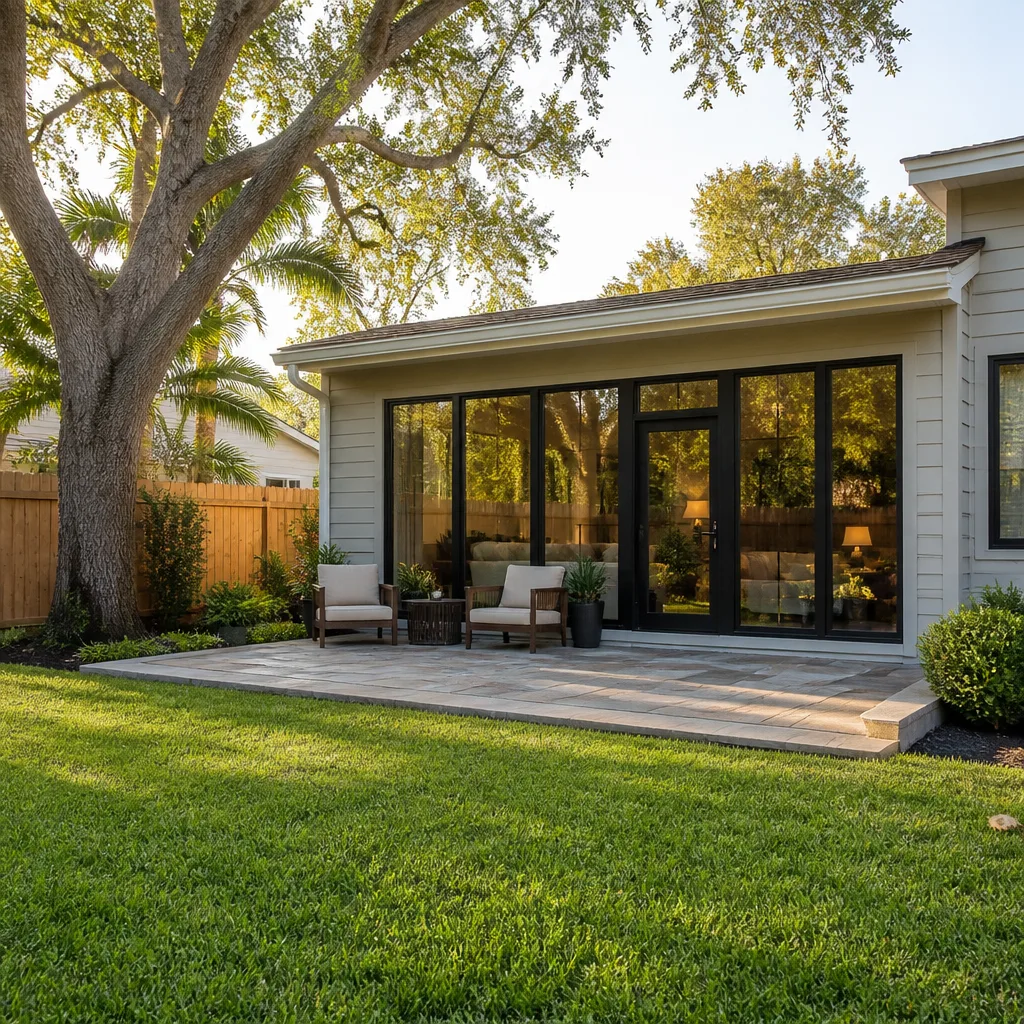
With proper installation and the required clearance from grade, James Hardie fiber cement siding routinely lasts 30 to 50 years in the Dallas climate, though the factory finish may need repainting every 10 to 15 years. The board itself rarely fails; what fails is the installation around it, the fasteners, or the flashing details that let water reach the substrate behind it.
Yes, individual boards and trim pieces can be replaced if the damage is localized and the surrounding installation is sound. We match the thickness, exposure, and color (factory ColorPlus code where applicable) so the repair blends. The caveat is if several adjacent boards are failed or the underlying sheathing is soft, in which case a fuller re-side is the honest fix. Call (940) 204-5368 and we’ll tell you which situation you’re in.
A straightforward board replacement on part of one wall usually takes one to two days, including tear-out, moisture barrier inspection, new flashing, and installation. A full addition or ADU re-clad runs one to two weeks depending on size, scope, and what we find behind the old siding. We schedule a fixed arrival window and our background-checked, uniformed crew shows up when we say they will.
We stock common HardiePlank lap siding, HardieTrim boards, and flashing materials on our trucks for most repairs. For specific ColorPlus finishes or less common panel profiles, we order directly from our Dallas-area supplier, which usually adds one to three days. KraftMaid, Cambria, and Silestone are among the other trade brands we draw from for the adjoining kitchen and bath work on additions.
Written by Trevor Nash, Owner, Penhallow Remodeling Dallas at Penhallow Remodeling Dallas, serving Dallas and nearby areas. Penhallow Remodeling Dallas is an independent service provider, not affiliated with James Hardie.


