
Free written scope consultation - allowances, timeline, and change-order rules on paper before a single trade is scheduled
James Hardie Bathroom Remodeling: The Dallas Owner’s Guide
James Hardie bathroom remodeling in Dallas typically runs $9,000 – $28,000 installed, depending on the size of the wet area, the condition of the framing behind your existing walls, and whether you’re doing a full gut or a surface refresh. Most Dallas homeowners reach out to us after they’ve pulled a loose tile and found crumbling gypsum board underneath, or after a caulk line keeps splitting along the tub flange no matter how many times they reseal it. The short version: James Hardie’s fiber cement backer board is one of the best substrates you can put behind tile in a Dallas bathroom, but it’s only as good as the installation and the waterproofing on top of it. Trevor Nash and our crew at Penhallow Remodeling Dallas deal with failed HardieBoard and HardieBacker installs weekly, and we’ll tell you what it costs to fix before we ever pick up a tool.
Which James Hardie Models This Applies To
When we talk James Hardie in a bathroom, we’re almost always talking about HardieBacker cement board, not the fiber cement siding James Hardie is famous for. HardieBacker comes in two main formats: the 1/4-inch version (HardieBacker 500) for floors and countertops, and the 1/2-inch version (HardieBacker 500 as well, just thicker) for wall applications in showers and tub surrounds. The 3×5 foot sheets are the standard size, though some Dallas supply houses carry the 4×8 sheets for larger walls with fewer seams.
The gotcha most homeowners run into: HardieBacker is dimensionally thinner than the old-school 1/2-inch Durock or WonderBoard panels, which means if your tile was originally set at a certain depth, swapping in HardieBacker can throw off the reveal where your shower valve trim meets the wall. We’ve fixed several Dallas remodels where a DIYer or handyman didn’t account for that 1/8-inch difference and the mixer trim ended up half-buried or floating. If you’re matching an existing install, measure the panel thickness, not just the tile depth. On the OEM versus aftermarket question: HardieBacker is the OEM product for this market. Off-brand cement boards exist, and some are fine, but we don’t install nameless backer board under tile we’re warranting for 365 days. The $8-a-sheet savings isn’t worth it in a Dallas bathroom that cycles between humid summers and dry winters.
Styles & brands we work with







Signs Your James Hardie Bathroom Remodeling Is Failing
- Grout keeps cracking along the bottom rows of the tub surround. This usually means the backer board was hung too tight to the tub flange, or the tub itself shifted after install. Water gets behind the tile, and the board starts wicking it up. The fix is rarely more grout. It’s pulling the bottom course and checking what’s behind it.
- You smell something musty near the shower that never fully goes away. Cement board itself doesn’t rot, but the wood studs behind it do. If the seam tape was skipped or the fasteners were overdriven, moisture gets through to the framing. In a Dallas summer, that stud cavity turns into a petri dish fast.
- Tiles sound hollow when you tap them. HardieBacker has excellent bond strength when it’s clean and dry at install, but if it was dusty from cutting or the installer didn’t wet the board before thin-set application (yes, that’s a real thing you’re supposed to do), the tile mortar never keys in. Hollow tiles = air gap = future popped tiles.
- The wall flexes slightly when you push on it. That’s a framing or fastener problem. HardieBacker needs screws every 8 inches on center in the field, every 6 inches on seams. If someone used drywall screws or spaced them too far apart, the whole assembly moves under pressure. Tile needs a stiff substrate. Movement is the enemy.
- Caulk at the tub-to-tile joint splits within weeks of recaulking. The tub moves when it fills with water, especially older fiberglass or acrylic units. The tile assembly has to be built to accommodate that movement, usually with a flexible sealant joint, not a rigid one. If the HardieBacker was installed hard against the tub deck with no gap, the stress tears through whatever caulk you apply.
See the difference
 Before
 After
After Before
 After
After Before
 After
AfterReplacement Cost & What’s Included
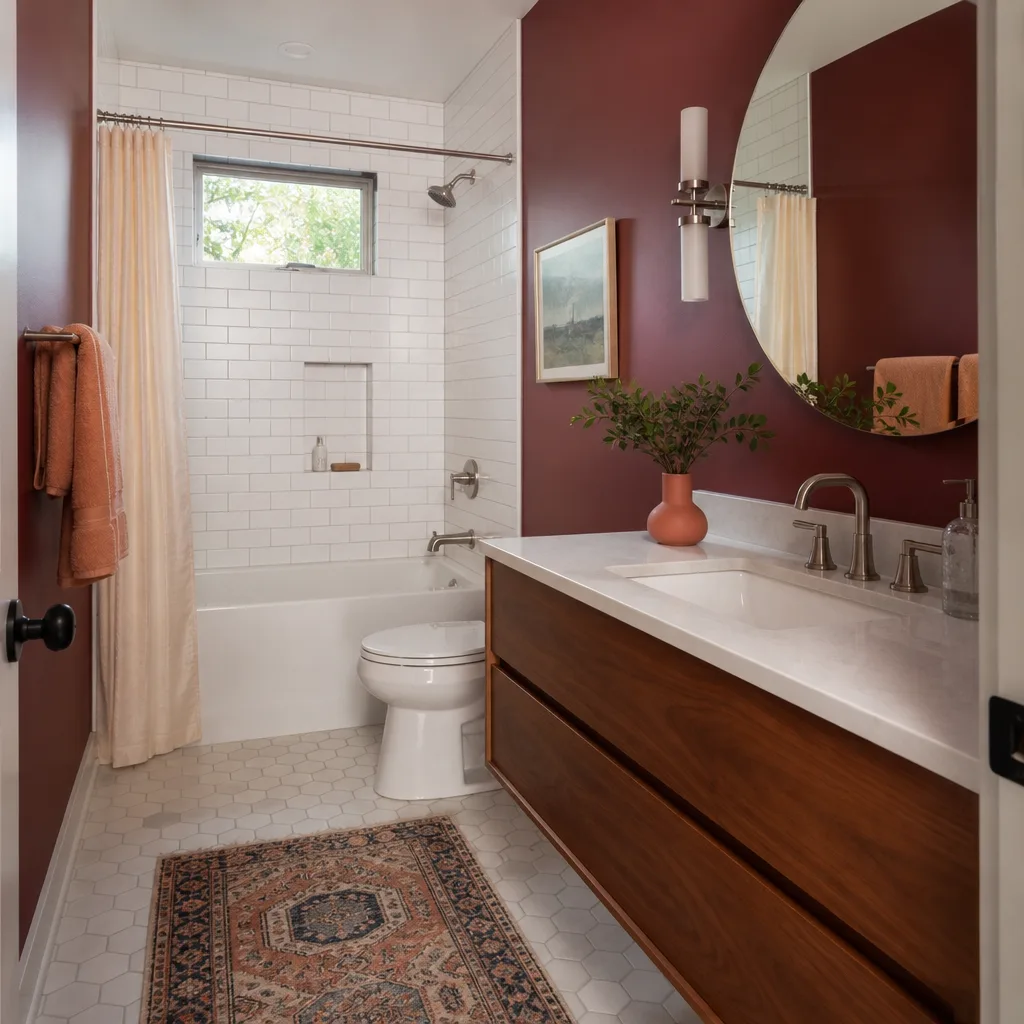
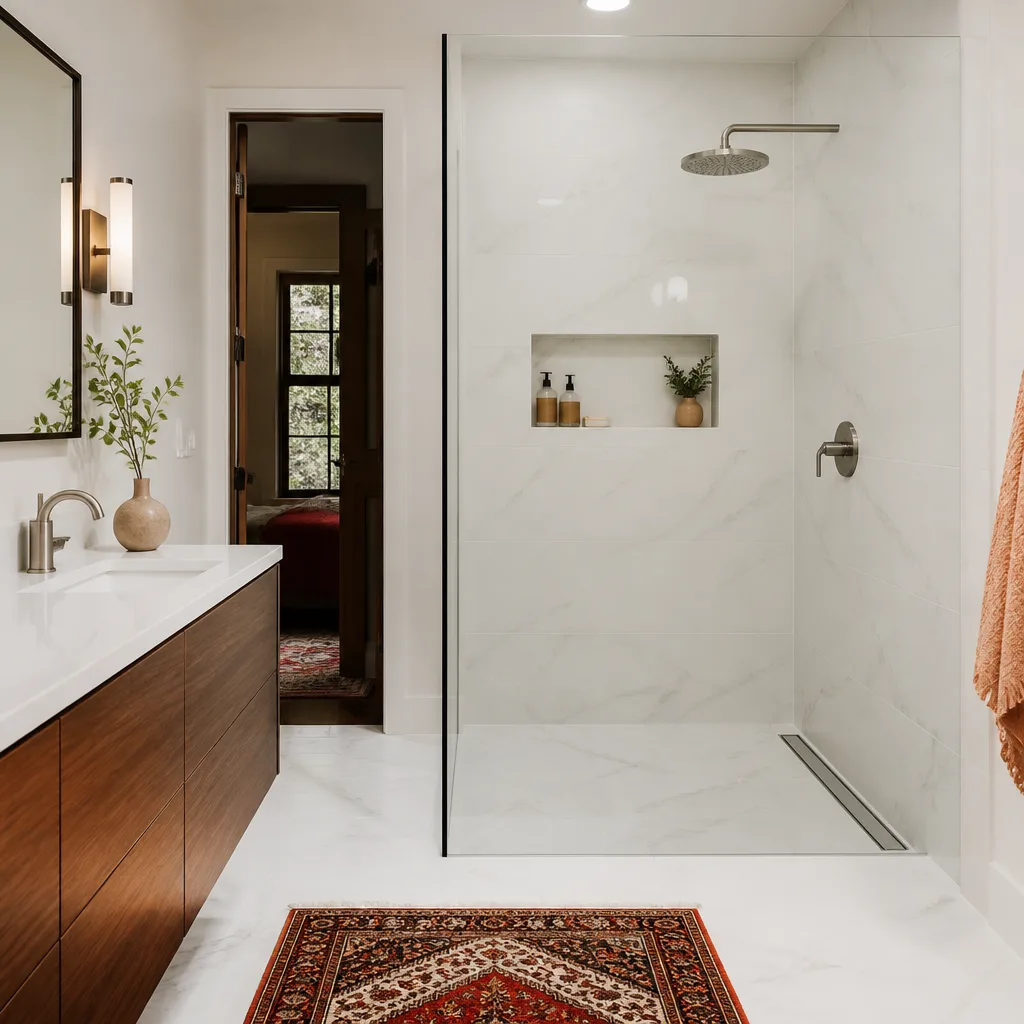
A full James Hardie bathroom remodel in Dallas, meaning we strip the walls to studs, replace rotted framing if needed, hang fresh 1/2-inch HardieBacker, seal and tape the seams, waterproof with a liquid membrane or sheet membrane, and re-tile, runs $9,000 – $28,000. The spread depends on three things: the square footage of tile, the tile material itself (ceramic and porcelain at the lower end, large-format and natural stone at the higher end), and what we find when the walls come open. A 5×8 guest bath with a standard tub surround and mid-grade porcelain tile lands around $9,000 – $14,000. A master bath with a walk-in shower, frameless glass, floor-to-ceiling tile, and a bench seat can push $20,000 – $28,000.
Every quote includes the demolition, disposal, any necessary framing repair, the HardieBacker or approved cement board substrate, waterproofing, tile setting, grout, sealant, and a written 365-day warranty on the entire installation. We also install KraftMaid and Wellborn vanities, Cambria or Silestone countertops, and Kohler or Moen fixtures, so if the failed backer board is just the starting point and you want the whole room done right, the quote covers it all. You get a written price before we start. The number on day one is the number on the final invoice. If the tile cracks, the grout fails, or the waterproofing leaks inside the first year, we come back and fix it at no charge. That’s the 365-Day Done Right Promise, and it’s in writing on every job.
DIY or Call Us?
You can spot-check a few things yourself. Tap the tiles and listen for hollow spots. Run a straight edge across the wall to see if it’s bowed. Look at the corner joints where the backer board seams were taped. If the tape is visible through the grout or the corners are cracking, you’ve got the answer. What you shouldn’t do is tear out the bottom course of tile, discover the studs are black, and then try to patch it with a few new sheets and some silicone. Moisture damage behind a shower wall is rarely localized. It spreads along the bottom plate and into the subfloor.
Cement board work isn’t like swapping a faucet. The waterproofing layer, the seam taping, the fastener pattern, and the way the board meets the pan or tub flange all have to be done in order, with the right materials, or you’ll be back inside the wall in a year. We see it in Dallas constantly. A homeowner gets three quotes, takes the cheapest, and the “remodel” is just new tile over the old rotted backer. Call us at (940) 204-5368 and we’ll come look at what you’ve got. No charge for the assessment. Give you a number before I pick up a tool, that’s the only way I know how to start.
FAQs
Properly installed HardieBacker with a full waterproofing system on top should last the life of the bathroom, which in practical terms means 30 – 50 years in a Dallas home. The board itself doesn’t rot, rust, or delaminate. What fails is the installation around it: bad seams, missing waterproofing, or movement at the tub flange. If it’s done right the first time, you’re replacing it because you wanted a style change, not because it failed.
In most Dallas jobs we see, the water damage extends further than the visible failure. If a bottom row of tile is loose and the studs behind are wet, we typically have to open the wall to the point of solid, dry framing and rebuild from there. For a small isolated crack in the board (rare, but it happens if a tub shifts), a targeted patch is possible. Most of the time, the honest answer is that a full surround rebuild costs only a little more than trying to save a wall that’s compromised. Call (940) 204-5368 and we’ll tell you straight which situation you have.
A standard tub surround replacement with HardieBacker, waterproofing, and tile runs five to seven working days. A full bathroom gut with floor tile, a new vanity, shower glass, and fixtures takes two to three weeks. We set the arrival window in writing and we hit it. You’ll know the schedule before the first sheet comes off the wall.
Yes. We keep 1/4-inch and 1/2-inch HardieBacker sheets, the proper cement board screws, alkali-resistant seam tape, and waterproofing membrane on hand for Dallas jobs. If you’re mid-remodel and the board behind your tile turns out to be the problem, we can usually start the fix the same week. We also keep Kohler and Moen trim kits, plus Cambria and Silestone sample chips, so you can pick finishes without waiting on a supplier.
Written by Trevor Nash, Owner, Penhallow Remodeling Dallas at Penhallow Remodeling Dallas, serving Dallas and nearby areas.


