
Free written scope consultation - allowances, timeline, and change-order rules on paper before a single trade is scheduled
Boxabl Home Additions & ADU: The Dallas Owner’s Guide
If you own a Boxabl Casita and you’re planning an addition or ADU around it in Dallas, you’re looking at $45,000 – $130,000 for a full home addition, and $90,000 – $220,000 for a detached ADU construction. We handle the structural work, the tie-ins, and the finishing: electrical, plumbing, siding, roofing, and interior build-out that makes the addition actually livable. Most owners call us after they’ve already got the Boxabl on-site and realize the factory connection details, the flashing, the utility hookups, and the local code requirements are a different job entirely than what the delivery crew handles.
Which Boxabl Models This Applies To
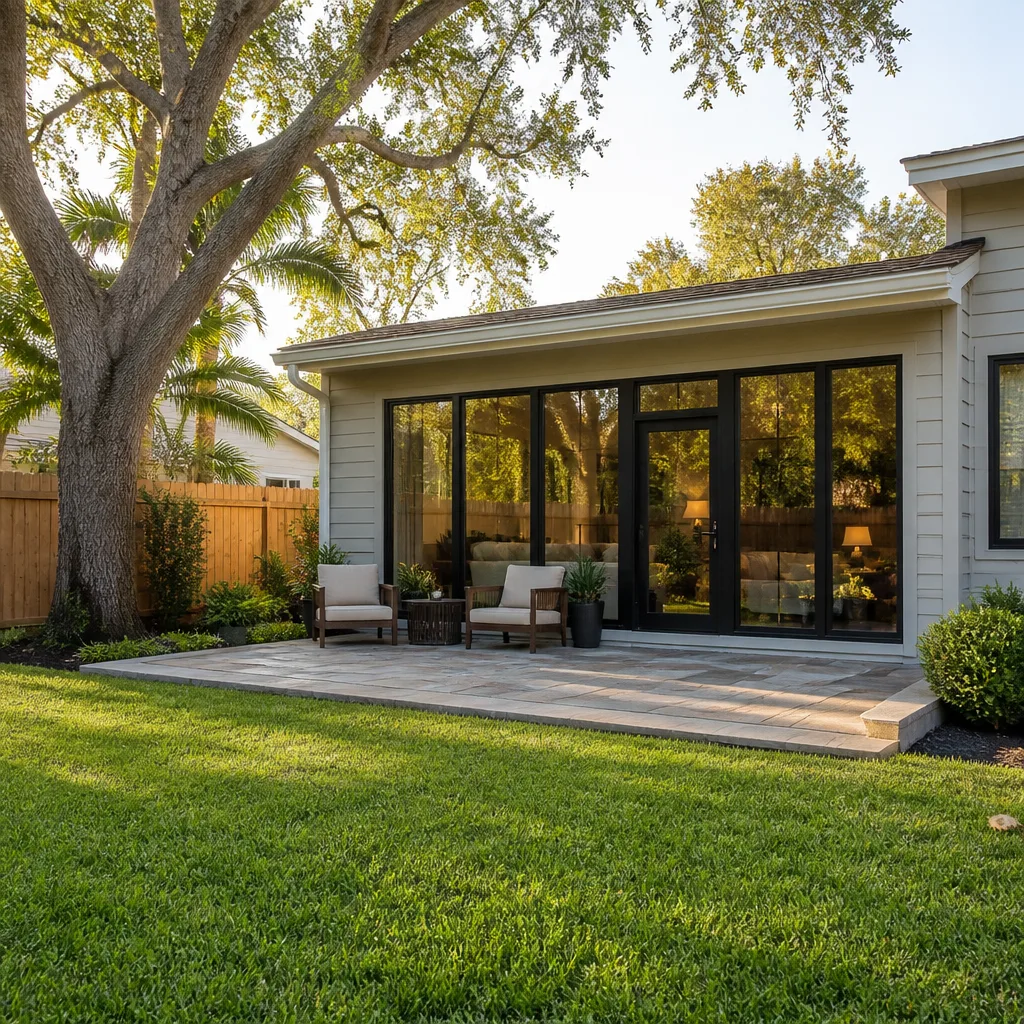
The Boxabl Casita is the model we see most often in Dallas, and the key thing to understand is that Boxabl’s folded structure uses a specific connection system at the hinge points and the utility chase. The panels are steel-framed with a composite skin, which means standard wood-framing techniques don’t transfer directly. When we’re adding a bedroom wing, a garage, or a covered porch to a Casita, we’re matching the steel frame with a conventional stick-built or steel-post addition and tying the two together with a properly flashed transition. The roof line matters: the Casita has a low-slope roof rated for its own footprint, and any addition needs independent drainage, not a tie-in that dumps water onto the existing membrane. That’s the single biggest compatibility gotcha we fix on Dallas jobs where a previous contractor tried to marry the two roofs as if both were shingled.
For parts and materials, we stock quality aftermarket equivalents rather than OEM-only for most Boxabl connection points: the steel-to-wood transition flashing, the Z-bar and counterflashing, the panel sealants, and the utility grommets that go through the steel skin. OEM parts exist, but lead times run long and the aftermarket options from brands we already trust – James Hardie for siding transitions, Therma-Tru for door openings – often outlast the original in Texas heat and hail cycles.
Styles & brands we work with







Signs Your Boxabl Home Additions & ADU Is Failing
- Water staining at the seam where the addition meets the Casita. This usually means the transition flashing was either installed without proper overlap or the sealant has failed after a couple of Dallas summers. UV and thermal cycling degrade sealants fast here.
- A visible gap opening at the roof transition. Steel and wood expand at different rates. If the addition’s roof sheathing is pulling away from the Casita’s steel edge, the fastening schedule was wrong for the material mismatch.
- Drafts or temperature swings in the new space. If the addition never quite holds heat or cool air, the insulation and air-sealing at the connection point is likely incomplete. Boxabl panels are factory-sealed; site-built additions are only as good as the crew’s air-sealing discipline.
- Cracking drywall along the ceiling line of the addition. This often signals foundation movement in Dallas’s expansive clay soil. The addition may have been built without proper pier depth, and the differential settling shows up at the seam first.
- Electrical or plumbing dead spots in the addition. When the addition was roughed in without accounting for how the Casita’s utility chase actually distributes power and water, you end up with undersized runs or circuits that trip. We trace the chase and run the addition’s utilities independently rather than piggybacking off the existing panel’s spare capacity that may not actually be spare.
See the difference
 Before
 After
After Before
 After
After Before
 After
AfterReplacement Cost & What’s Included
For a full home addition in Dallas, you’re looking at $45,000 – $130,000 depending on square footage, whether it’s a single-story or two-story addition, the foundation type, and the finish level. A detached ADU runs $90,000 – $220,000 because it involves its own foundation, utility runs, sewer or septic tie-in, and a full kitchen and bath build-out. What drives the number up or down: the soil condition on your lot, the distance from the existing utility panel and water service, whether you need engineered plans and permits pulled, and the cabinet and countertop lines you choose. We use KraftMaid and Wellborn cabinetry, Cambria and Silestone countertops, and Kohler and Moen fixtures, which all carry their own manufacturer warranties alongside our written guarantee. Every job includes a written price before work starts, a defined arrival window, and our 365-Day Done Right Promise: if anything fails inside that year, we come back and fix it at no charge.
DIY or Call Us?
The parts of a Boxabl addition or ADU project that a homeowner can safely handle: painting, basic trim work, and maybe some landscape grading around the new foundation. What you shouldn’t do yourself: anything involving the electrical panel, the gas line, the sewer tie-in, or the structural connection between the addition and the Casita. That’s not a convenience recommendation; it’s a safety line. A steel-to-wood roof transition that’s flashed wrong leaks slowly and rots everything under it before you see the stain. A sewer tie-in done wrong backs up into the house. Trevor Nash has seen enough of both on Dallas job sites to say it plainly: if a contractor tells you a Boxabl addition is simple because it’s “just a box next to a box,” hang up and call us at (940) 204-5368. We’ll give you a real number and a real schedule before any tools come off the truck.
FAQs
A properly built addition with the correct connection detailing to a Boxabl Casita should last 30 to 50 years with normal maintenance, though the sealants and flashing at the transition point may need refreshing every 8 to 12 years due to Dallas heat. The factory-built Casita itself carries its own lifespan expectations, but the site-built addition’s longevity depends entirely on foundation depth, flashing quality, and air-sealing done right the first time. Call (940) 204-5368 for an honest assessment of what you’ve got.
In most cases, yes. If the issue is flashing, sealant, drywall cracking, or utility distribution, we can repair the specific failure points without tearing down the addition. The cases where repair doesn’t make sense are when the foundation was under-built for Dallas soil conditions or the framing was so compromised by water that patching becomes more expensive than a clean rebuild. We’ll tell you which one you’re dealing with before any work starts.
Plan on 3 to 6 months from permit approval to final inspection for a detached ADU in Dallas. The variables are your site’s soil report, utility connection distances, weather windows for foundation and roof work, and the finish selections you make. We give a written schedule alongside the written price, and we hold ourselves to it under the Kingswell standard.
We keep the common transition materials in stock: steel-to-wood flashing, Z-bar, counterflashing, panel sealants rated for steel and composite, utility grommets, and the framing connectors used to tie a conventional addition to a Casita’s steel frame. Specialty-order items like OEM Boxabl panel components go through our supplier network with real lead times, not open-ended promises. Call (940) 204-5368 and we’ll check what’s on the shelf for your project.
Written by Trevor Nash, Owner, Penhallow Remodeling Dallas at Penhallow Remodeling Dallas, serving Dallas and nearby areas.


