
Last updated October 15, 2026



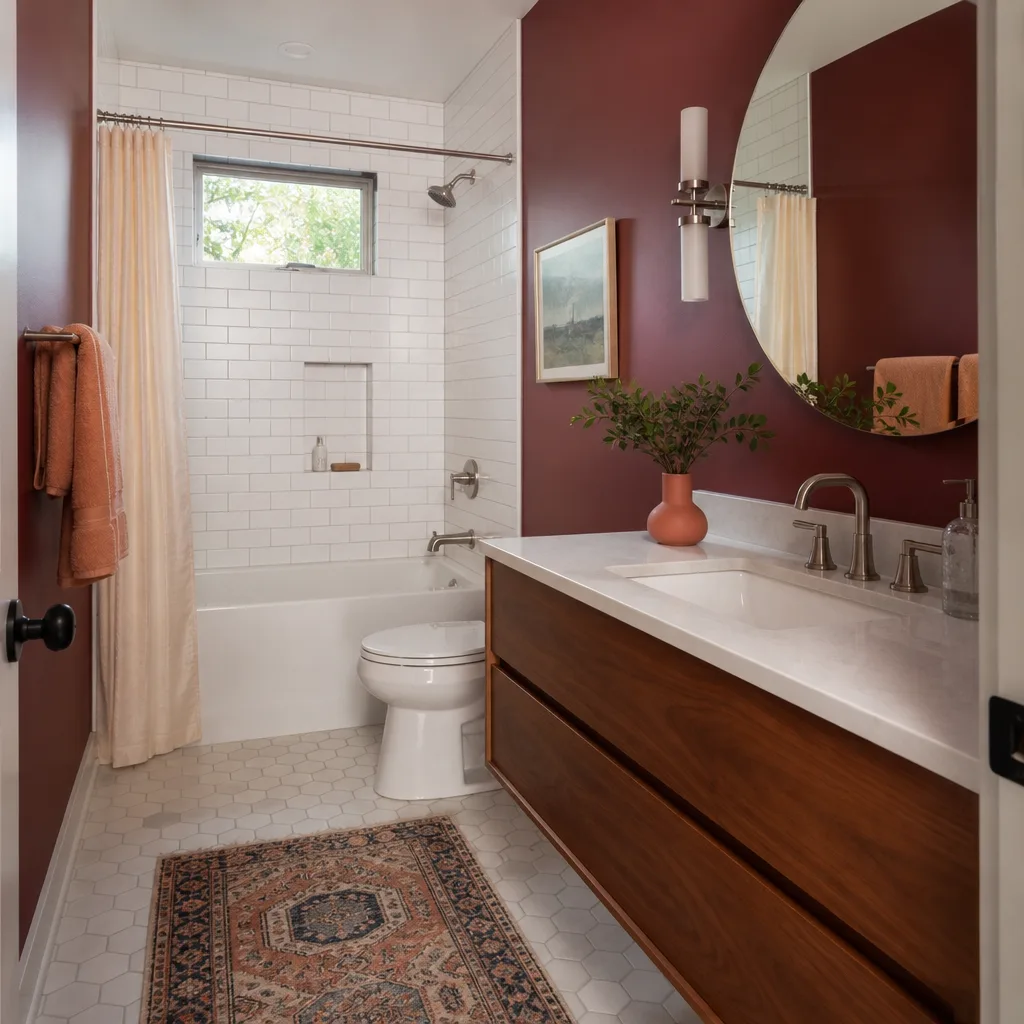

Free written scope consultation - allowances, timeline, and change-order rules on paper before a single trade is scheduled
DIY vs Professional Construction: The Dallas Homeowner’s Decision Guide
The most expensive home improvement mistake in Dallas isn’t a crooked tile line or a bad paint color. It’s the one that shows up in your home sale documents. In Texas, a homeowner can legally pull their own permit for most residential work, but if they sell the house within a year, certain unpermitted or owner-performed work must be disclosed on the seller’s disclosure notice, and some lenders won’t underwrite the buyer’s loan. That one fact reshapes the entire DIY-versus-hire calculation for Dallas homeowners. This guide walks you through which jobs genuinely make sense to do yourself, which ones carry legal and insurance consequences that make “saving money” a fiction, and how to split a project down the middle so you keep the parts you’ll enjoy and hand off the parts that can hurt you.
Styles & brands we work with







Quick Answer
For a Dallas homeowner, the DIY-versus-professional decision comes down to three questions: does the work require a permit, does it touch a licensed trade (electrical, plumbing, HVAC, structural), and will it be flagged during resale inspection. Our General Contractor Maintenance Checklist for Dallas Homeowners can help you assess each project before you start. Cosmetic work like painting, basic trim, and cabinet hardware is genuinely DIY-friendly. Anything involving load-bearing walls, electrical panels, gas lines, drain rough-in, or the exterior envelope of the house is not, because mistakes there trigger insurance denials, inspection failures, and mandatory seller disclosures in Dallas that eat whatever you “saved.”
Table of Contents
- Texas Permit Law for Homeowners: What You Can Actually Pull
- Task-by-Task Matrix: Where DIY Makes Sense in Dallas
- The Dallas Clay Soil Problem: Why Cheaper Materials Fail Here
- Insurance Voids and Resale Flags: The Consequences You Don’t See
- The Hybrid Approach: Prep and Demo Work You Can Legitimately Do
- What a Written Professional Guarantee Covers That DIY Never Can
- The Real Cost Comparison: Labor Rates vs. Total Project Cost
- Common Mistakes to Avoid
- When to Call a Professional
- Frequently Asked Questions
- The Bottom Line
Texas Permit Law for Homeowners: What You Can Actually Pull
Texas is unusual among states in how much latitude it gives homeowners. Under the Texas Government Code and the International Residential Code as adopted by Dallas, a homeowner who occupies the property as their primary residence can obtain an owner-builder permit for most residential work, including structural changes, additions, and major remodels. You are not required to hire a licensed general contractor to pull permits for your own home. That sounds like an open door for DIY, and in some ways it is. But the door has three locks on it.
First, the City of Dallas still requires that certain trades be performed by state-licensed professionals regardless of who holds the permit. Electrical work requires a licensed Texas electrician. Plumbing work requires a licensed Texas plumber. HVAC installation and modification requires a licensed Texas air conditioning contractor. You cannot self-perform these scopes under an owner-builder permit, no matter how skilled you are. The permit office will reject drawings that show otherwise, and inspectors will fail the work if they discover an unlicensed person did it.
Second, when you sell your home in Dallas, the Texas Seller’s Disclosure Notice asks whether you are aware of any “room additions, structural modifications, or other alterations or repairs made without necessary permits or not in compliance with building codes in effect at the time.” If you pulled an owner-builder permit and did the work yourself, that is a material fact. A buyer’s lender can delay or deny financing if the work was owner-performed within the last year, because FHA and VA underwriting guidelines treat recent unpermitted or owner-builder work as a risk factor. Conventional lenders vary, but many will ask for a third-party structural inspection before they’ll write the loan.
Third, and most overlooked: when you sign an owner-builder permit, you sign a legal affidavit stating that you are performing the work yourself and not acting as an unlicensed contractor for hire. If you hire day laborers or an unlicensed handyman to help you, and something goes wrong, you are entirely responsible for injuries and code violations. There is no contractor’s license shield, no bond, no insurance policy behind you. In Dallas, where the permitting office has inspectors in every neighborhood and neighbors report unpermitted work, the practical cost of getting caught is a stop-work order, a fine, and a re-inspection process that can add weeks to your timeline.
Task-by-Task Matrix: Where DIY Makes Sense in Dallas
Here is the honest breakdown of common remodeling tasks, scored by four factors that matter for a Dallas homeowner: whether Dallas requires a permit, whether an insurance claim can be denied if the work fails, whether a home inspector will flag it during resale, and how much real skill the task demands. The higher the score in the first three columns, the weaker the DIY case.
Interior Painting
- Dallas permit required: No
- Insurance void risk: None
- Resale inspection flag risk: None
- Realistic skill threshold: Low
Painting is the most genuinely DIY-friendly task on this list. A careful homeowner with good tape, primer, and patience can match the quality of a professional for interior walls. The one caveat: ceiling work and trim cutting separate the patient from the hurried. If you rush, the edges show, and a buyer’s inspector doesn’t flag bad paint, but a buyer’s eye does.
Cabinet Hardware and Fixture Replacement
- Dallas permit required: No
- Insurance void risk: None
- Resale inspection flag risk: None
- Realistic skill threshold: Low
Swapping cabinet pulls, changing faucet trim, or replacing a light fixture bracket (without touching wiring) is low-risk DIY. Note the electrical caveat: in Dallas, any work that involves moving or adding wiring requires a licensed electrician. Replacing a fixture on an existing box is generally fine for a homeowner. Adding an outlet or moving a switch is not.
Tile Installation
- Dallas permit required: No
- Insurance void risk: Moderate (water damage from failed waterproofing)
- Resale inspection flag risk: Low to moderate (lippage, hollow spots)
- Realistic skill threshold: High
Tile looks approachable until you’re on your knees with a wet saw at 9 p.m. The marginal cost of a professional tile setter in Dallas is reasonable compared to the cost of ripping out a bad installation. More importantly, in Dallas’s clay soil, subfloor movement means your waterproofing layer has to be done right. A hairline crack in the substrate (the moisture-resistant layer behind your tile) turns into a mold problem inside the wall. This is the crossover point where DIY stops being a money decision and starts being a liability decision.
Cabinet Installation
- Dallas permit required: No
- Insurance void risk: Low
- Resale inspection flag risk: Low (unless cabinets are load-bearing in odd ways)
- Realistic skill threshold: High
Stock cabinets from the home center go in with shims, patience, and a level. Semi-custom and custom cabinetry do not. KraftMaid and Wellborn cabinets, for example, come with specific installation instructions that affect the warranty. If you install them yourself and the drawer slides sag in six months, the manufacturer will ask who installed them. A professional kitchen remodeler’s installation is part of the warranty chain. When you DIY the install, you become the warranty.
Electrical Work (Beyond Fixture Swaps)
- Dallas permit required: Yes
- Insurance void risk: High (fire claims denied for unpermitted electrical work)
- Resale inspection flag risk: High
- Realistic skill threshold: High, plus state licensing restriction
In Texas, any electrical work beyond replacing a like-for-like fixture requires a licensed electrician. This is not a skill question. It is a legal one. If you perform unpermitted electrical work and a fire occurs, your homeowners insurance company will investigate the cause. If the investigation finds unpermitted work, the claim is denied. In Dallas, where many homes are 40 to 70 years old with wiring that has been touched by multiple owners, this is not a theoretical risk.
Plumbing Rough-In
- Dallas permit required: Yes
- Insurance void risk: High (water damage from amateur pipe work)
- Resale inspection flag risk: High
- Realistic skill threshold: High, plus state licensing restriction
Moving a drain line or adding a supply line requires a licensed Texas plumber. The risk of a slow leak inside a wall cavity is catastrophic in a way that a visible mistake is not. Water damage claims are already the most common homeowners insurance claim in Texas. Denying one because of unpermitted plumbing is the fastest way to turn a $400 “saving” into a $40,000 repair.
Structural Framing and Wall Removal
- Dallas permit required: Yes
- Insurance void risk: High
- Resale inspection flag risk: High
- Realistic skill threshold: Very high
Removing a wall without knowing whether it is load-bearing is the single most dangerous DIY act in a Dallas home. It is also the one most likely to be flagged in resale, because the seller’s disclosure specifically asks about structural modifications. A load-bearing wall carries the roof and ceiling load down to the foundation. In some Dallas homes, walls that appear non-load-bearing are actually carrying a point load from a beam above. The fix for a mistake is a structural engineer, a beam spec, a permit, and re-framing. That is a $6,000 to $15,000 correction for a project that started as a “free” DIY weekend.
HVAC Work
- Dallas permit required: Yes
- Insurance void risk: Moderate to high (refrigerant handling is regulated)
- Resale inspection flag risk: Moderate
- Realistic skill threshold: High, plus state licensing restriction
HVAC work in Texas requires a state-licensed contractor. Refrigerant handling is federally regulated under the EPA. This is not a corner you can cut. The only DIY-adjacent HVAC tasks are filter changes, condenser coil cleaning, and thermostat battery replacement. Anything involving ductwork, line sets, or refrigerant must be done by a licensed professional.
The Dallas Clay Soil Problem: Why Cheaper Materials Fail Here
Dallas sits on expansive clay soil that moves. This is the single most important local factor in any remodeling decision, and it is the one most guides written for a national audience completely miss-though you can find Dallas-specific guidance in our Seasonal Construction Care for Dallas: Year-Round Homeowner’s Guide. The soil under your foundation swells when it rains and shrinks when it dries. That movement transfers through the slab and into everything attached to it: tile, flooring, drywall, cabinetry, and even the framing in older homes.
What this means practically: improperly set tile in Dallas fails faster than the same tile in a stable-soil market like Phoenix or most of Florida. A tile installer in Dallas has to account for movement joints, proper thinset coverage, and decoupling membranes in ways that a homeowner watching YouTube tutorials will not. The materials cost the same. The skill requirement does not.
We see this in North Dallas and Richardson regularly: a homeowner installs a beautiful floor in the spring, and by the following summer the grout is cracking along a diagonal line that traces the slab’s movement. The tile didn’t fail. The substrate preparation did. This is why the “I can do it cheaper myself” math breaks down in Dallas specifically. The material savings get eaten by the replacement cost when the same failure happens again in 14 months.
This also applies to flooring choices. Solid hardwood in a Dallas home needs an acclimation period and a moisture barrier that accounts for the slab’s vapor transmission. Luxury vinyl plank can handle the movement better, but only if the subfloor is flat within manufacturer tolerance. A professional crew measures flatness with a laser before the first plank goes down. A DIY install often skips that step because it’s tedious. The result is a floor that looks fine for eight months and then develops hollow spots that click when you walk across them.
Insurance Voids and Resale Flags: The Consequences You Don’t See
The cheapest part of any remodel is the labor you save. The most expensive part is the consequence you didn’t know existed. In Dallas, three specific consequences follow amateur work that most homeowners never factor into their decision.
Insurance denial. Homeowners insurance policies in Texas contain a clause known as the “concealment or fraud” provision, but more practically, they contain exclusions for losses caused by faulty workmanship. If you perform unpermitted electrical work and the house burns, the insurer will investigate. If the fire originates at the junction box you wired yourself without a permit, the claim is denied. You eat the entire rebuild cost. This is not a scare tactic. It is the standard practice of every major carrier, and Dallas insurance agents will tell you the same if you ask directly.
Resale disclosure obligations. The Texas Seller’s Disclosure Notice is a legal document. It asks, in Section 6, about “Structural Modifications” and “Room Additions” and whether they were done with permits. If you answer no and the buyer’s inspector finds evidence of unpermitted work, you have committed fraud in a real estate transaction. That is a civil claim with damages that can exceed the cost of the remodel. Dallas real estate agents increasingly recommend that sellers pre-emptively address any known unpermitted work before listing, because FHA and VA buyers simply cannot close on a house with open permit issues.
Lender underwriting. FHA and VA loans require that the property meet minimum property standards. Recent owner-performed work without permits is a red flag. A buyer who loves your house will get a conditional approval that says “provide permits for the 2022 bathroom remodel.” If you can’t, the deal dies, or you discount the price to cover the buyer’s risk. In a Dallas market where multiple offers are common, a house with clean permits beats a comparable house with a permit question every time.
None of this is about skill. It’s about a paper trail. A professional remodeler’s permit record is part of the resale package. Your DIY weekend is a question mark on a legal document. That is the real cost comparison.
The Hybrid Approach: Prep and Demo Work You Can Legitimately Do
The smartest homeowners we work with don’t choose between DIY and professional. They split the project. There are specific tasks you can do yourself that genuinely reduce the professional labor cost without touching licensed-trade or permit-required scope.
Here is a step-by-step approach that works for Dallas homes:
- Start with a written scope of work. Before you demo anything, write down exactly what the professional will do and what you will do. This prevents the most common source of project conflict: the homeowner who demos too much and creates a mess the contractor has to fix at hourly cost.
- Demo only what is explicitly agreed. Removing cabinets, pulling up old flooring, and taking down drywall are tasks a homeowner can do, but only up to the line where structure or utilities are exposed. If you expose wiring or plumbing, stop. The professional needs to see it before anything moves.
- Handle the finishes, not the systems. Prime and paint the walls before the cabinets go in. Caulk and seal after the tile is set. Install the cabinet hardware. These are low-risk, high-visible tasks that save real labor hours without touching anything that requires a permit.
- Do your own haul-away where practical. Dallas has specific construction debris rules. If you have a trailer and can haul demo debris to the McCommas Bluff Landfill on your own, you eliminate a line item. If you can’t, the professional will handle it, but know that it’s a line item.
- Prep the site before the crew arrives. Clear the work area, protect the flooring in adjacent rooms, and move furniture. Every hour a professional crew spends moving your belongings is an hour you’re paying for at professional rates.
- Stop at the permit line. If the task requires a permit, you do not touch it. Period. The moment you work past the line, you become the general contractor on the permit, and in Texas that carries legal liability you do not want.
The hybrid approach works best when you have a written understanding of where your work stops and the professional’s begins. A good general contractor in Dallas will define that line clearly at the estimate stage, not after demo day. That is the difference between a collaborative project and a dispute.
What a Written Professional Guarantee Covers That DIY Never Can
When you do the work yourself, you are the only person standing behind it. When a professional does the work, the guarantee is a legal promise, not a hope. Here is what that difference looks like in practice.
A written guarantee means the contractor will return and fix the work if it fails within the guarantee period. It is not goodwill. It is contractual. If the tile cracks in month eight because the substrate was prepared wrong, a written guarantee means the contractor tears it out and redoes it at their cost. Your DIY tile crack is your cost, your time, your second round of materials.
We put a 365-Day Done Right Promise in writing on every project we do in Dallas. If the work fails inside a year, we come back and make it right at no charge. That’s not a promotional phrase. It’s a sentence in the contract, and it means exactly what it says. A homeowner’s personal guarantee to themselves is no guarantee at all.
There is also the layer of manufacturer warranties that professional installation protects. Cambria quartz carries its own warranty. Kohler fixtures carry theirs. KraftMaid cabinets carry theirs. But nearly every one of those warranties includes an exclusion for improper installation. When a professional installs the product, the warranty chain is intact. When you install it yourself, the manufacturer’s first question after a failure is “who installed this?” and the warranty dies at that question.
The honest way to compare DIY and professional cost is not hourly labor rate versus zero. It is total project cost including the cost of failure. A professional’s written guarantee transfers part of that failure risk off your ledger. DIY keeps all of it on yours.
The Real Cost Comparison: Labor Rates vs. Total Project Cost
Dallas homeowners tend to compare the cost of a professional remodel to the cost of materials at the home center. That is the wrong comparison. Here is the right one.
A kitchen remodel in Dallas typically runs $18,000 to $55,000 when done by a professional, depending on layout, cabinet line, and countertop material. The materials might be 40 to 50 percent of that. The labor is the rest. A DIY version of the same kitchen might cost $9,000 to $25,000 in materials alone. That looks like a massive saving until you factor in these lines that the materials receipt doesn’t show:
- Tools. A wet tile saw, a cabinet jack, a drywall lift, a miter saw, a laser level. A Dallas homeowner doing a bathroom and kitchen will spend $1,500 to $3,000 on tools they’ll use once or twice.
- Time. A professional crew finishes a bathroom remodel in 3 to 5 weeks. A homeowner working nights and weekends takes 4 to 8 months. If you value your time at $30 an hour, that’s $10,000 to $20,000 of your own time.
- Mistakes. The average DIY project includes one meaningfully wrong material order or one failed inspection. Say $600 to $2,000.
- Re-work. The tile that fails in month 14, the cabinet that sags, the floor that clicks. $3,000 to $10,000 depending on scope.
- Resale discount. If the work is flagged at inspection or the buyer’s lender asks for permit paperwork you don’t have, expect a price reduction of $5,000 to $15,000 or a deal that falls apart entirely.
Add those lines up and the “saving” disappears in most cases. The professional quote is not a labor tax. It is a bundled price for a completed, guaranteed, permitted outcome. In Dallas, where the market moves fast and buyers have inspectors who know what to look for, that bundle is worth what it costs.
As a General Contractor in Dallas, we’ve priced enough projects to know that the second-most-expensive remodel is the one that has to be redone. The most expensive is the one that has to be disclosed on a seller’s notice.
Common Mistakes to Avoid
- Assuming “I can pull my own permit” means “I can do everything myself.” Texas lets you pull the permit for your own home, but Dallas still requires licensed trades for electrical, plumbing, and HVAC. The permit is not a license to skip the trade requirement.
- Demolishing a wall before confirming it’s not load-bearing. In older Dallas homes, walls that look like partitions sometimes carry a point load from above. The test is not “does it wiggle.” The test is a structural plan, and if you don’t have one, you don’t know.
- Underestimating the clay soil factor. Dallas’s expansive soil moves your slab every season. Tile and flooring prep that works in other markets fails here. If your DIY research doesn’t mention movement joints and flatness tolerance, it’s coaching you for the wrong climate.
- Forgetting that owner-performed work gets disclosed at resale. The Texas Seller’s Disclosure Notice forces the question. If you did the work yourself without permits, you disclose it or you commit fraud. There is no third option.
- Comparing labor rate to zero. The real comparison is total project cost including tools, time, mistakes, re-work, and resale risk. If you only compare the labor line, you’re comparing against a number that doesn’t exist.
- Skipping the written scope before starting a hybrid project. When DIY and professional work overlap, the most expensive disputes come from unclear boundaries. Write down who does what before anyone swings a hammer.
- Using unlicensed day labor on an owner-builder permit. The owner-builder affidavit says you’re doing the work yourself. Hiring unlicensed help violates that affidavit and puts all injury and code liability on you.
When to Call a Professional
Call a professional the moment the work touches a structure, a system, or a permit. That means load-bearing walls, foundation-adjacent framing, any electrical beyond a fixture swap, any plumbing beyond replacing a washer, any HVAC, any gas line, and any exterior envelope work. If you are not sure whether a wall is load-bearing, the answer is to call someone who can tell you. If you are not sure whether the task requires a permit in Dallas, the answer is to call the building department or a contractor who pulls permits daily. You don’t need a professional for painting, cabinet hardware, or tile demolition. You do need one for anything that shows up on a seller’s disclosure. Penhallow Remodeling Dallas offers free estimates in Dallas, call (940) 204-5368 to schedule yours.
Frequently Asked Questions
A kitchen remodel in Dallas typically runs $18,000 to $55,000 depending on layout, cabinet line, and countertop material. A bathroom remodel typically runs $12,000 to $35,000. Whole-home remodels start around $75,000 and go up from there depending on square footage and scope. These ranges assume a permitted, licensed-trade, professionally-installed project with a written guarantee. Call (940) 204-5368 for an exact quote, estimates are free.
Yes, Texas allows a homeowner who occupies the home as their primary residence to obtain an owner-builder permit for most residential work, including structural changes and remodels. However, electrical, plumbing, and HVAC work still requires state-licensed trades regardless of who holds the permit. The owner-builder permit also carries legal obligations you sign for in an affidavit, including responsibility for all injuries and code compliance on the project.
You must disclose it on the Texas Seller’s Disclosure Notice. If the buyer’s lender finds out through inspection or title review, financing can stall or be denied, especially for FHA and VA loans. If you fail to disclose it and the buyer discovers it after closing, you may face a civil fraud claim. The safest path is to pull permits at the time of the work, or to have a licensed contractor do the work under their permit.
Interior painting, cabinet hardware replacement, fixture swapping on existing electrical boxes, simple trim work, and agreed-upon demo or site prep are genuinely safe for a careful homeowner. These tasks require no permit, carry no insurance void risk, and don’t flag on a resale inspection. Anything beyond these starts to intersect with the permit and licensing line.
Yes. Dallas’s expansive clay soil moves the slab seasonally, and that movement transfers into tile, flooring, and drywall. Tile that is set without proper movement joints and substrate preparation fails faster here than in stable-soil markets. This means material cost savings from DIY are often short-lived, because the replacement timeline in Dallas’s soil is shorter than a mortgage amortization schedule.
A written guarantee is a contractual promise to return and fix the work if it fails within the guarantee period, at the contractor’s cost. Manufacturer warranties on materials like Cambria quartz or KraftMaid cabinetry generally exclude improper installation, so a professional install keeps the full warranty chain intact. DIY leaves you as the only person standing behind the work, with no one to call when it fails. If you want the work guaranteed in writing in Dallas, call (940) 204-5368 for a free estimate.
The Bottom Line
The DIY-versus-professional decision in Dallas is not about whether you can do the work. It’s about whether the work can hurt you later. Painting, hardware, and careful demo are honest money-savers. Electrical, plumbing, structural, and HVAC are not DIY territory because Texas law, your insurance policy, and your resale disclosure all treat them as licensed scope. The clay soil under your house makes material shortcuts more expensive here than in other markets. And the only person who guarantees a DIY result is you. For everything else, the written price and written guarantee model exists for a reason. We recommend you use it. For more guides & resources on protecting your Dallas home investment, visit our blog.
Written by Trevor Nash, Owner at Penhallow Remodeling Dallas, serving Dallas since 2004.
See the difference
 Before
 After
After Before
 After
After Before
 After
After

