
Free written scope consultation - allowances, timeline, and change-order rules on paper before a single trade is scheduled
CWS Home Additions & ADU: The Dallas Owner’s Guide
If you’re looking at a CWS home addition or ADU that’s showing signs of failure, we install and repair CWS-compatible addition and accessory dwelling unit components in Dallas with typical project costs running $45,000 – $130,000 for a home addition and $90,000 – $220,000 for a freestanding ADU. Most owners discover the problem the hard way: a door that suddenly won’t close square, water staining along the roofline where the addition ties into the existing house, or a floor that’s started to feel soft underfoot. The good news is that structural failures in Dallas additions are almost always traceable to a specific weak point, and identifying it early usually means a repair that costs thousands, not tens of thousands.
We’re Penhallow Remodeling Dallas, an independent remodeling company serving homeowners across Dallas. We’re not affiliated with CWS, but we’ve worked on enough CWS-built additions and ADUs across the metroplex to know exactly where they fail and what it takes to fix them right. Trevor Nash, our owner, has been framing and remodeling since he was fourteen, and he’s the first to tell you that the written quote comes before any tool gets picked up.
Which CWS Models This Applies To
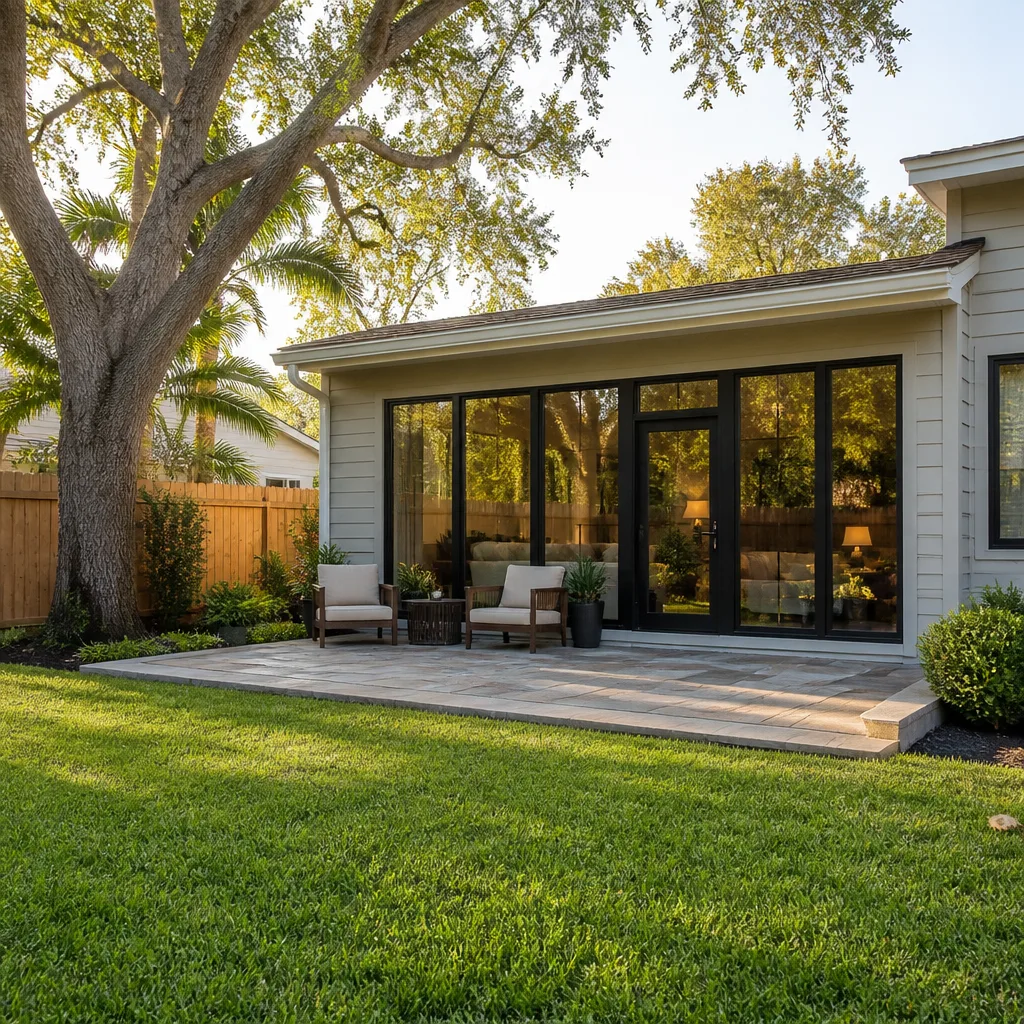
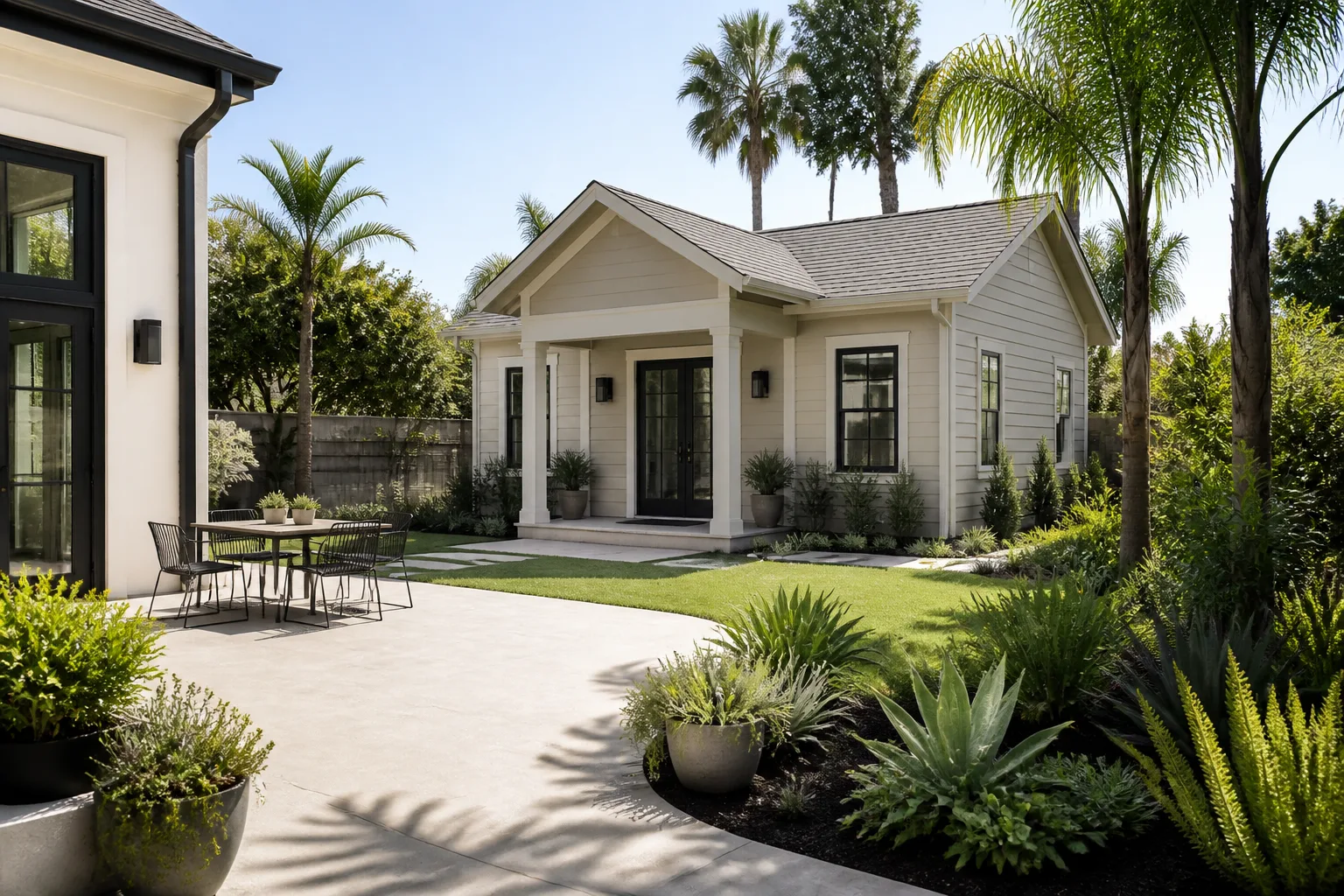
CWS home additions and ADUs in the Dallas market span a range of configurations, but the field compatibility breaks down into three categories: site-built room additions (bedroom suites, family rooms, sunrooms), attached ADUs (in-law suites with a kitchenette and bath), and detached ADUs (backyard cottages with full utilities). The CWS units we see most often around Dallas neighborhoods like Lake Highlands, Preston Hollow, and Oak Cliff are the attached ADU and single-story room addition series, typically framed with dimensional lumber, set on a concrete perimeter foundation, and tied into the existing roof with a valley or shed connection.
If you’re trying to identify your specific CWS model, look for the metal ID plate or engraved serial number on the electrical subpanel door, or on the underside of the sill plate in the crawlspace if you have one. The plate will list the series code and the year of construction, which matters because CWS changed its roof tie-in detail around 2016. Pre-2016 units often used a simple step-flashing detail without a copper transition strip at the roofline junction, and that’s the single biggest source of water intrusion we’re called out to inspect in Dallas. For replacement parts, we stock the correct flashing profiles, sill seal, and Simpson tie connectors that match CWS framing specs. In most cases, genuine CWS replacement parts are priced at a premium with no meaningful difference in material quality versus a quality aftermarket equivalent, so we’ll always show you both numbers and let you choose.
One Dallas-specific note: CWS exterior trim on units built before 2014 used finger-jointed primed pine that doesn’t hold up to our summer humidity and freeze-thaw cycles. We replace it with PVC or James Hardie trim, and we won’t put pine back even if you ask us to. That’s a conversation we’ve had with homeowners in Garland and Mesquite more times than I can count.
Styles & brands we work with







Signs Your CWS Home Additions & ADU Is Failing
- Roofline water staining or drips at the junction where the addition meets the main house. This is almost always the flashing detail. The original metal step flashing pulls away from the siding over time, especially on Dallas homes that settle, and the leak follows the rafter line into the ceiling. It starts as a discolored patch and becomes a drywall failure within a month if left alone.
- A door that binds or won’t latch, or a window that suddenly sticks. When you see this in an addition but not elsewhere in the house, the foundation is moving. Dallas clay soil expands in spring rains and contracts in summer heat, and a CWS unit on a shallow perimeter footing will move with it. Sticking doors are the first visible sign.
- Soft spots or sagging in the floor, especially near exterior walls. In CWS additions that sit low to the ground, this is usually a moisture problem underneath. Crawlspace vent blockages trap humidity, the joists start to rot at the sill, and the subfloor goes spongy. By the time you feel it underfoot, the joist ends are already compromised.
- Cracks in the drywall or exterior stucco that keep reappearing after patching. Small hairline cracks are normal in any Dallas addition. Cracks wider than a quarter-inch, or cracks that reopen within months of being patched, tell you the structure is still moving and the original tie-in wasn’t properly done.
- A musty smell in the ADU or addition that you can’t eliminate. That’s trapped moisture. In CWS units without a properly vented crawlspace or adequate wall flashing, humidity from the Dallas climate gets into the wall cavity and stays there. The smell is the first thing you notice. Mold usually follows.
See the difference
 Before
 After
After Before
 After
After Before
 After
AfterReplacement Cost & What’s Included
For a CWS home addition or ADU repair in Dallas, the installed cost depends entirely on what failed and how far it’s gone. Here are the ranges we quote most often:
- Roofline re-flashing and water damage repair: $2,500 – $7,500 depending on how much sheathing and drywall needs to come out.
- Foundation stabilization for a moving addition: $6,000 – $18,000 for pier installation and structural tying, depending on access and how many piers the engineer specifies.
- Full structural repair of a failing addition (roofline, walls, floor): $15,000 – $60,000 depending on square footage and what’s rotted or compromised.
- Complete home addition or ADU rebuild from the foundation up: $45,000 – $130,000 for additions and $90,000 – $220,000 for ADUs, which is the right answer when the existing structure isn’t safe to keep.
Every number we give you is written before work starts, not an estimate range we can drift from later. That’s how Trevor does it, and it’s the Kingswell standard we operate under: written price up front, defined arrival window, clean job site, and a 365-day guarantee on the work in writing. If the repair fails inside that year, we come back and fix it at no charge, no service call fee, no re-inspection fee. If you’re already a Penhallow customer and a repair we did starts showing problems, that second visit is free.
DIY or Call Us?
Replacing a CWS addition or ADU component isn’t like swapping a doorknob. The roofline tie-in, the foundation connection, and the exterior flashing all sit at the intersections where the structure takes its biggest weather and movement loads. If the fix isn’t right, you get the same failure in six months and you’ve spent a weekend and a trip to the lumberyard for nothing. We’ve more than once pulled apart a homeowner’s DIY flashing repair and found the old rotten sheathing still hidden underneath, quietly spreading.
What you can safely inspect yourself: walk around and note any cracks wider than a quarter-inch, check for daylight coming through the crawlspace vent screens, and feel along the baseboard for softness. That’s information worth having when you call us. Everything after that is work for someone who does it every day. Call (940) 204-5368 and we’ll come out, look at the actual failure, and give you a written number before we touch a thing.
FAQs
A properly built CWS addition or ADU on a Dallas foundation with correct flashing and ventilation should last 50 years or more with normal maintenance, but the roofline flashing and exterior trim typically need attention every 10 – 15 years because of our climate’s heat and humidity cycles.
Most failures can be repaired without a full rebuild, as long as the structural framing hasn’t already rotted or shifted past the point of salvage; that’s the first question we answer during the inspection, and we’ll always tell you if a repair is the smarter money.
A flashing repair with minor wood replacement is usually done in two to three days, but a structural repair that involves foundation piers or roofline reconstruction can take two to four weeks, depending on what we find once we open the walls. Call us at (940) 204-5368 and we’ll give you a timeline with the quote, in writing.
We stock the common CWS-compatible flashing profiles, sill seal, structural connectors, and PVC trim pieces on our service vehicles, and we maintain relationships with KraftMaid, Cambria, and Silestone for any cabinet or countertop replacement tied to the repair. If we’re doing a warranty return visit, the parts come out of our shop, not your pocket.
No. The number on the written quote is the number on the invoice. The only way that changes is if we open up the wall and find something no one could have seen before the work started, and even then, we’ll stop, show you what we found, and give you a new written price before moving forward. You’ll never get surprised at the end by a change order you didn’t approve.
- Key Takeaways:
- Most CWS addition failures in Dallas trace back to the roofline flashing, the foundation tie, or trapped moisture.
- Repairs cost a fraction of a rebuild if you catch them early, and we’ll tell you honestly which one you’re facing.
- The written price, defined arrival window, and 365-Day Done Right Promise are on every project we do.
- We’re an independent Dallas company, not affiliated with CWS, and we’ve been working on these units across the metroplex for years.
If your CWS home addition or ADU is showing cracks, binding doors, water stains, or that damp smell you can’t get rid of, call (940) 204-5368 to schedule a free estimate. We’ll give you a number before we pick up a tool, in writing, and we’ll stand behind it for a full year after the work is done. That’s the only way we know how to start.
Written by Trevor Nash, Owner, Penhallow Remodeling Dallas at Penhallow Remodeling Dallas, serving Dallas and nearby areas.


